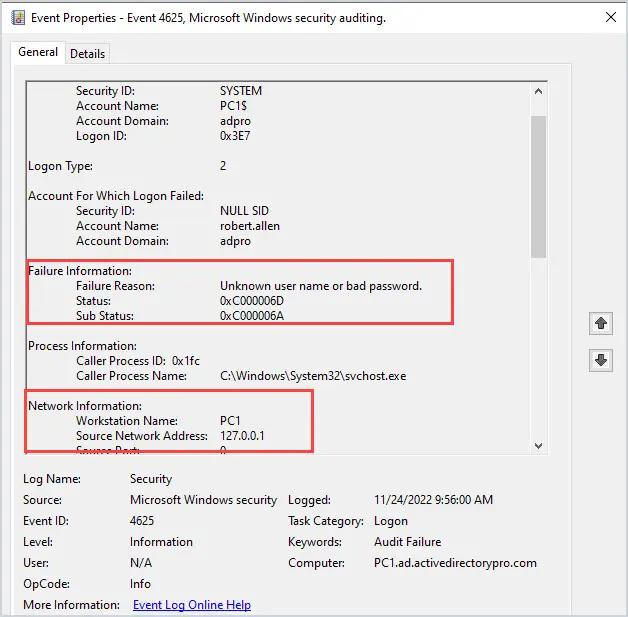





1. What is a Brute Force attack?


A brute force attack consists of automatically testing thousands (or even millions) of username/password combinations until the correct one is found.

Objective:


- Gain access to an account (email, VPN, server…)
- Take control of a system
- Move laterally within the network (larger attack)
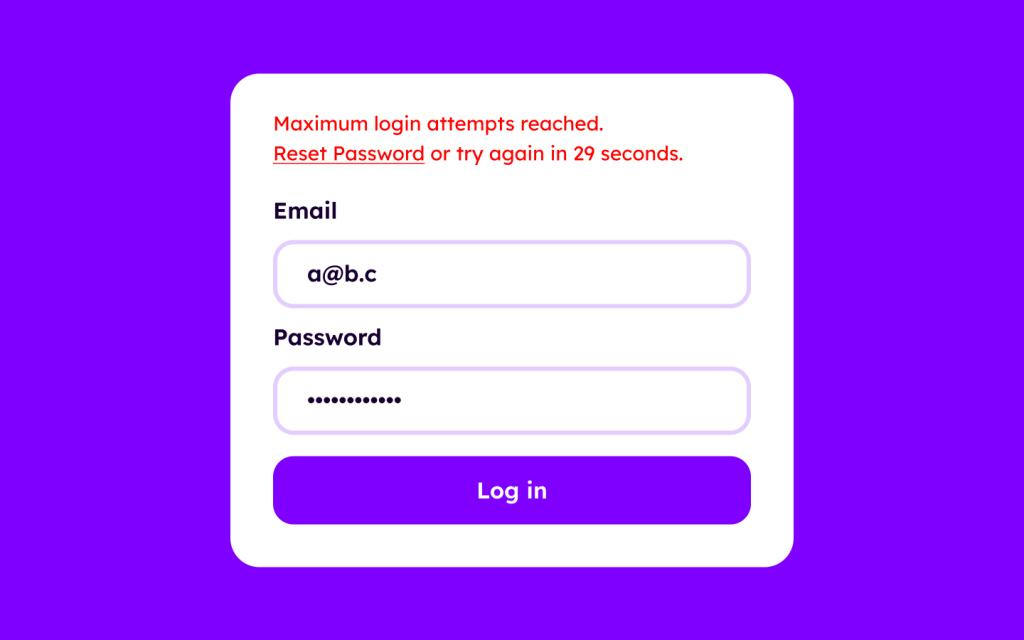


2. How does it work?
Real-world operation (as seen in a SOC):


   1. The attacker selects a target (e.g., admin account)
   2. Uses an automated tool (e.g., Hydra, Burp Suite, scripts)
   3. Sends mass login requests:
- login + password1
- login + password2
- login + password3
   4. Exploits:
- weak passwords
- lack of login attempt limitations

Variants:
- Password spraying (one password across multiple accounts)
- Credential stuffing (using leaked credentials)

3. How to detect it?

SOC Indicators (very important)
- High number of failed logins (FAILED LOGIN)
- Multiple attempts within seconds
- One IP targeting multiple accounts
- Abnormal activity outside working hours

Detection via SOC tools

      1. SIEM (e.g., Splunk / Wazuh)
Tab used:
- Search / Discover / Logs

What you see on screen:
```
Event: Failed login
User: admin
Source IP: 192.168.1.50
Count: 150 attempts in 2 minutes
```

Typical query:
```
failed password OR login failed
```

Alerts:
- "Multiple failed login attempts"
- "Brute force suspected"
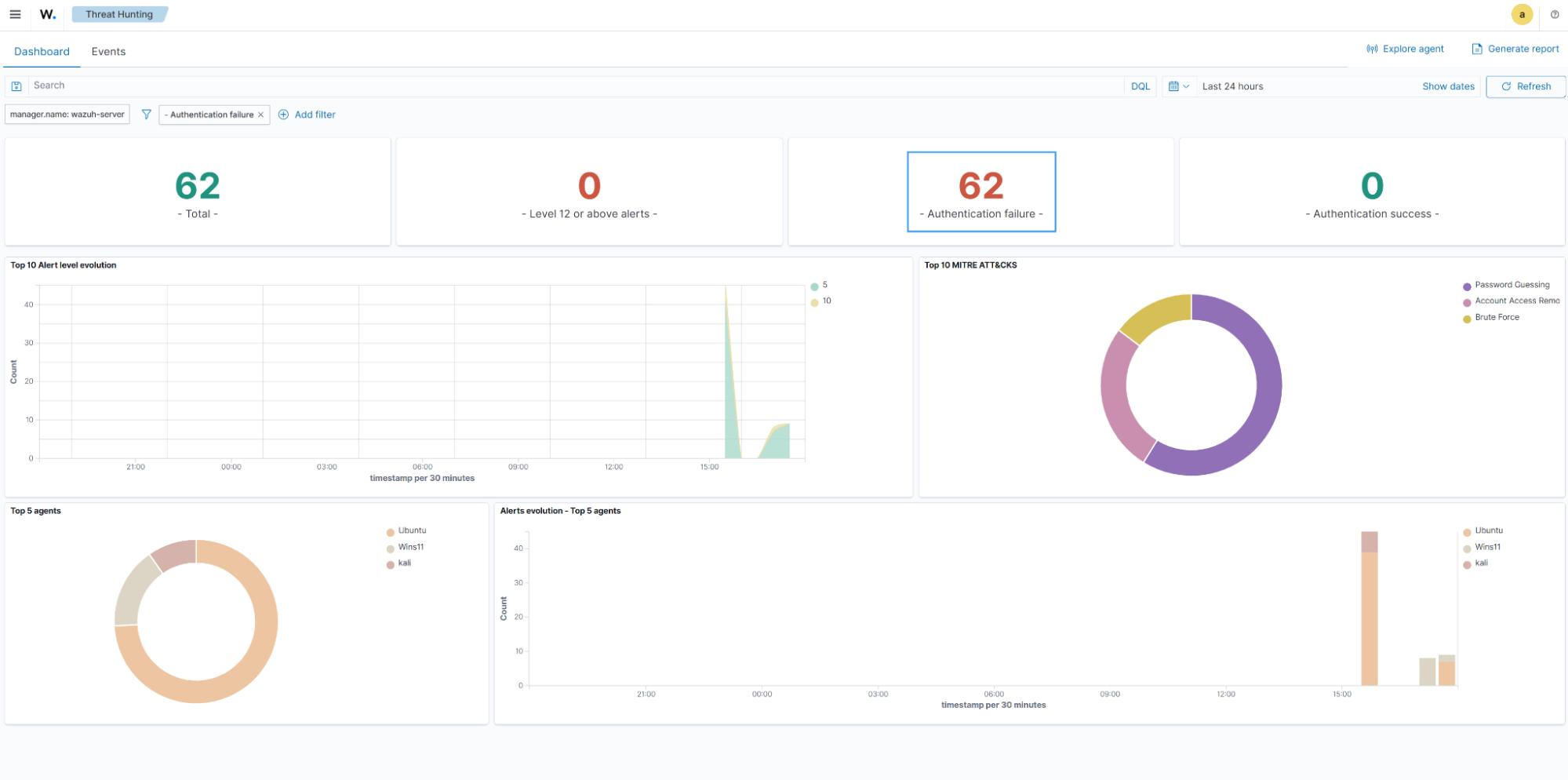


       2. EDR (e.g., Microsoft Defender for Endpoint)
Tab:
- Incidents / Alerts

Display:
- Alert: "Suspicious authentication activity"
- Timeline showing multiple attempts
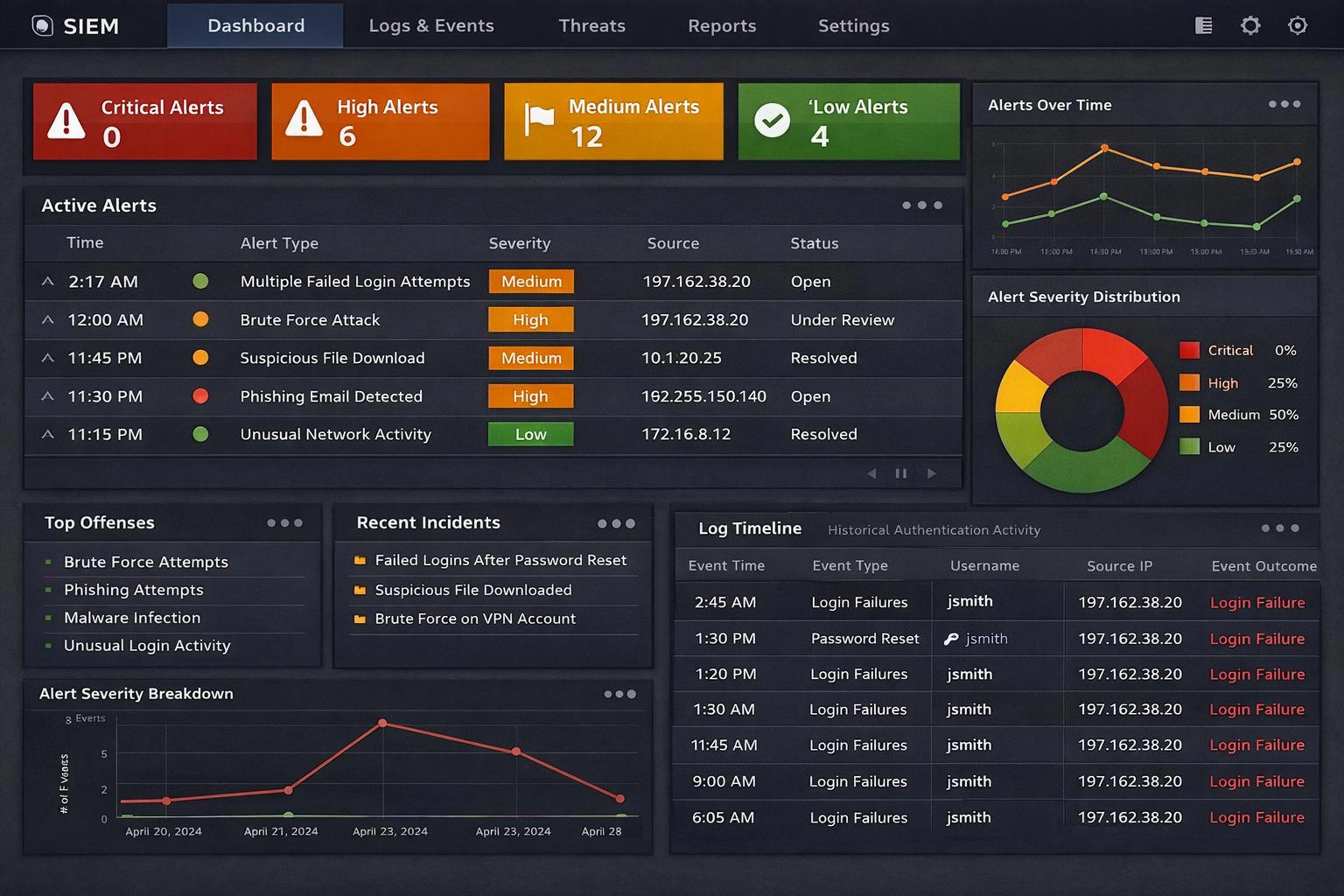


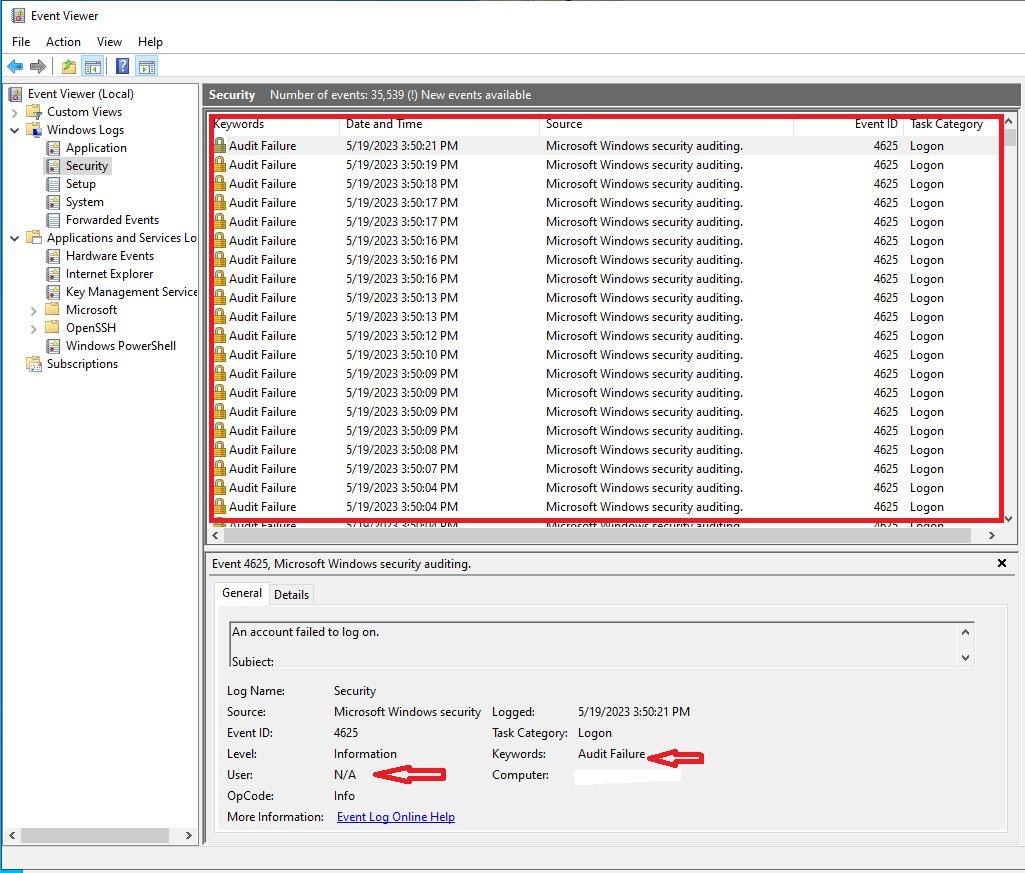
       3. Active Directory (Windows Logs)
Tab:
- Event Viewer → Security

Important Event ID:
- 4625 → failed login

Example:
```
Account failed to log on
Failure Reason: Unknown user or bad password
```

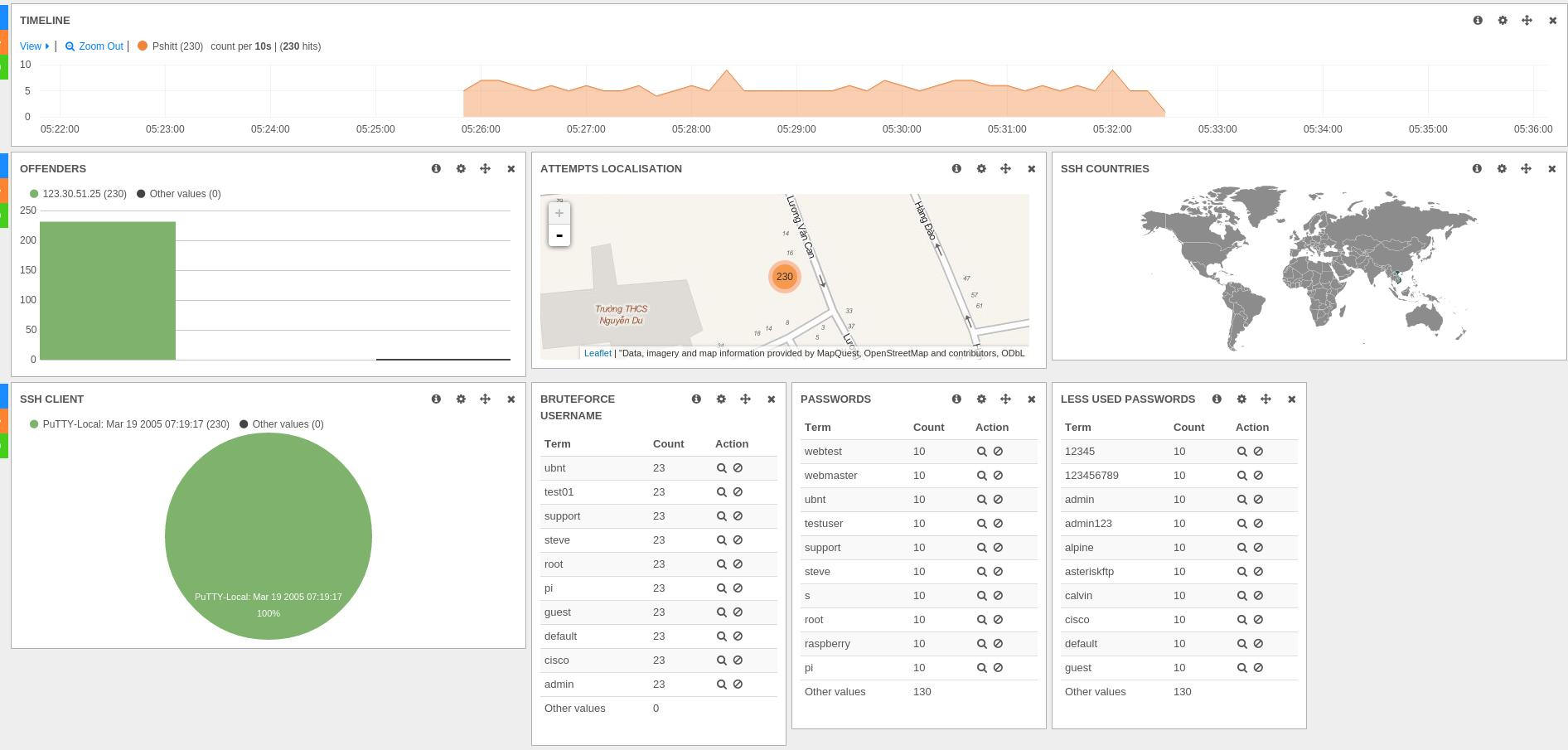
        4. Firewall / VPN (e.g., FortiGate)
Tab:
- Logs & Report → Authentication

What you see:
- Multiple attempts from the same IP
- Suspicious country


4. What to do? (SOC Response)

Level 1 (Junior Analyst)
- Verify:
- Number of attempts
- Source IP
- Targeted account
- Confirm brute force suspicion

Immediate actions
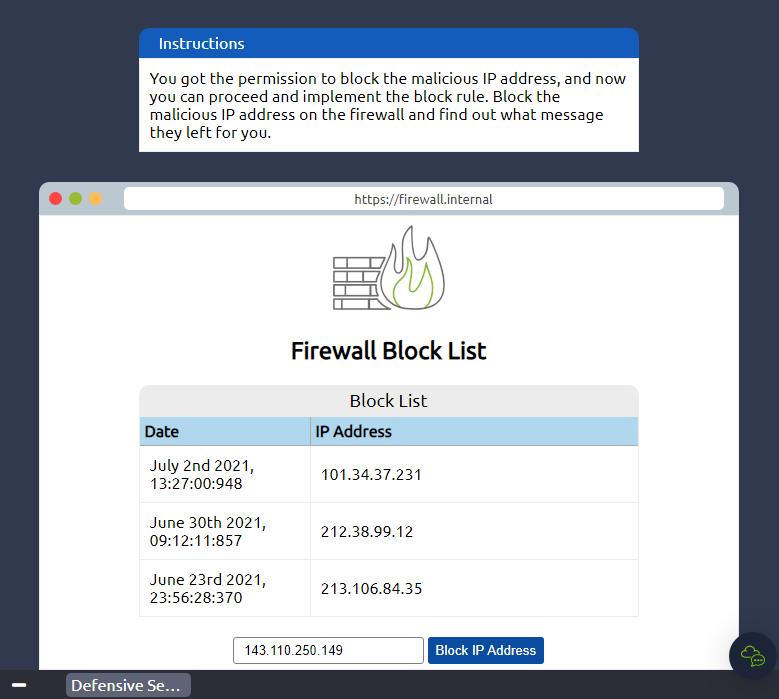
- Block the IP (Firewall)
- Disable or lock the account
- Enable automatic lockout if not configured

Level 2 (Investigation)
- Check if any login succeeded after failures
- Look for suspicious activity post-login
- Analyze other targeted accounts

Containment
- Isolate the machine if compromised
- Reset passwords
- Enforce MFA


5. Prevention

Essential measures
- MFA (Multi-Factor Authentication) ✅
- Strong password policy
- Login attempt limitation (account lockout)
- CAPTCHA (web)

SOC best practices
- SIEM alerts properly configured
- 24/7 monitoring
- Automatic IP blocking (SOAR)

Recommended tools
- SIEM: Splunk / Wazuh
- EDR: Microsoft Defender for Endpoint
- Firewall: FortiGate

6. What the student must remember
A brute force attack = many login attempts in a short time
Detection = logs + SIEM + Event ID 4625
Response =
- Block
- Investigate
- Secure

Prevention =
MFA + strong passwords + attempt limitation



Copyright © All rights reserved.


* Cybersecurity Analyst
* SOC Analyst
* Security Operations Center
* Cloud Security
* DevSecOps
* Information Security
* Cybersecurity Engineer
* Threat Detection
* Incident Response
* SIEM Monitoring

---

# 🛡️ 2. Mots-clés SOC (très importants pour recrutement)

* SOC Analyst Tier 1
* SOC Analyst Tier 2
* Security Monitoring
* Log Analysis
* Security Alerts
* Threat Hunting
* Malware Analysis
* Phishing Detection
* Brute Force Detection
* Incident Investigation
* Security Events
* Blue Team

---

# ☁️ 3. Mots-clés Cloud Security

* Cloud Security Engineer
* AWS Security
* Azure Security
* Cloud Infrastructure Security
* Cloud Threat Detection
* Cloud Monitoring
* Identity and Access Management (IAM)
* Cloud Compliance
* Cloud Security Best Practices

---

# ⚙️ 4. Mots-clés DevSecOps

* DevSecOps Engineer
* Secure CI/CD Pipeline
* Security Automation
* Infrastructure as Code Security
* Docker Security
* Kubernetes Security
* Application Security
* Code Security
* SAST / DAST
* Continuous Security

---

# 🔬 5. Mots-clés techniques (très puissants SEO)

* Splunk
* ELK Stack (Elasticsearch, Logstash, Kibana)
* Microsoft Sentinel
* Wireshark
* Sysmon
* Linux Security
* Windows Security Logs
* Network Security
* Firewall Logs
* IDS / IPS

---

# 🚀 6. Mots-clés “portfolio / recrutement”

👉 Très important pour être trouvé par RH

* Cybersecurity Portfolio
* SOC Analyst Portfolio
* Cybersecurity Projects
* Cybersecurity Labs
* Security Use Cases
* Threat Detection Lab
* Cybersecurity Skills
* Entry Level Cybersecurity
* Junior Cybersecurity Analyst

---

# 📈 7. Mots-clés SEO longue traîne (ULTRA PUISSANT)

👉 Ceux-là font la différence 🔥

* Cybersecurity analyst portfolio website
* SOC analyst projects and labs
* How to detect cyber attacks using SIEM
* Cybersecurity incident response examples
* Cloud security best practices for beginners
* DevSecOps security pipeline example
* SIEM log analysis tutorial
* Threat detection use cases

---

# 🧠 STRATÉGIE SEO (très important)

## 📌 Où mettre ces mots-clés :

* Page d’accueil (titre + description)
* Page “About”
* Page “Labs”
* Titres H1 / H2 / H3
* Meta description
* URL des pages

---

# 🏆 EXEMPLE DE TITRE SEO (à utiliser)

👉
**Cybersecurity Analyst Portfolio | SOC, Cloud Security & DevSecOps Projects**

---

# 🏆 EXEMPLE META DESCRIPTION

👉
**Cybersecurity Analyst portfolio with hands-on labs in SOC monitoring, SIEM, Cloud Security and DevSecOps. Available for hiring.**

---
 

Manager DSI (secteur bancaire)

🎯 Mots-clés principau

# 🏦 🔥 1. Mots-clés Manager DSI (secteur bancaire)

## 🎯 Mots-clés principaux

* IT Manager
* IT Director
* Head of IT
* IT Governance
* Information Systems Management
* Digital Transformation
* IT Strategy
* Enterprise IT

---

## 🏦 Spécifique BANQUE (très puissant)

* Banking IT Systems
* Core Banking Systems
* Financial Information Systems
* Banking Cybersecurity
* Risk Management Banking
* IT Compliance Banking
* Data Protection Banking
* Financial Security

---

## ⚖️ Gouvernance & conformité

* IT Governance Framework
* COBIT
* ITIL
* Risk Assessment
* Business Continuity Plan (BCP)
* Disaster Recovery Plan (DRP)
* Regulatory Compliance

---

## 📊 Management & pilotage

* IT Project Management
* Team Leadership IT
* IT Operations Management
* KPI IT Performance
* IT Service Management (ITSM)
* Strategic IT Planning

---

# 🏥 🛡️ 2. Mots-clés RSSI (hôpital / santé)

## 🎯 Mots-clés principaux

* Chief Information Security Officer (CISO)
* Information Security Manager
* Cybersecurity Governance
* Security Risk Management
* Security Policies

---

## 🏥 Spécifique SANTÉ (très important)

* Healthcare Cybersecurity
* Hospital Information Systems (HIS)
* Patient Data Protection
* Medical Data Security
* Health IT Security
* Electronic Health Records (EHR) Security

---

## 🔐 Sécurité & conformité

* ISO 27001
* NIST Cybersecurity Framework
* GDPR Compliance
* Data Privacy
* Access Control
* Identity Management

---

## 🚨 Gestion des incidents

* Incident Response Management
* Security Operations Management
* Cyber Risk Assessment
* Vulnerability Management
* Threat Intelligence

---

# 🚀 🧠 3. Mots-clés hybrides (TRÈS PUISSANTS 🔥)

👉 Ceux-là font le lien entre ton profil actuel et ton évolution :

* Cybersecurity Leadership
* IT Security Strategy
* Enterprise Security Architecture
* Security Governance
* IT Risk Management
* Digital Security Transformation
* Cloud Security Governance